 By Aditya Tiwari, Anshuman Enterprises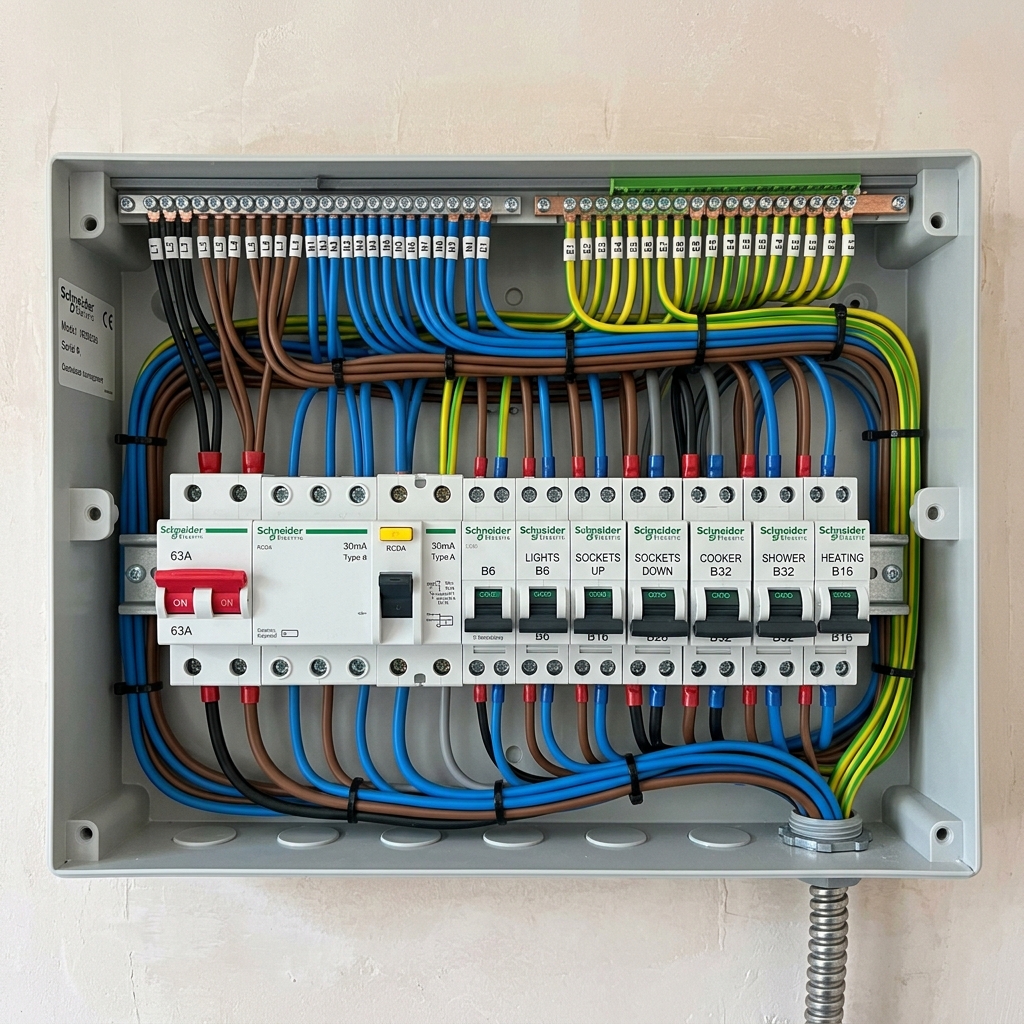
Building a new home in Greater Noida is a dream come true, but getting the electrical wiring wrong can turn that dream into a massive safety hazard. Electricity is the unseen lifeblood of your home. It powers your air conditioners in the scorching summer, runs your geysers in the winter, and keeps your entire family connected and safe. Yet, thousands of homeowners leave the critical decisions about house wiring entirely up to uncertified local electricians.
Using undersized wires, installing cheap counterfeit switches, or neglecting proper earthing are the leading causes of electrical fires and short circuits in modern Indian homes. When you are investing tens of lakhs into building your house, cutting corners on electrical materials is the worst possible decision you can make.
In this extremely detailed, 2000+ word masterclass by the technical experts at Anshuman Enterprises, we will break down exactly how to wire a new house. We will demystify technical terms like wire gauge (sq mm), FRLS vs FR cables, and distribution board load balancing so you can oversee your project like a true professional.
Table of Contents
- ▸ 1. Planning Your Electrical Layout and Blueprints
- ▸ 2. Calculating Total Electrical Load for Your Home
- ▸ 3. Understanding Wire Gauges: 1.0 vs 1.5 vs 2.5 vs 4.0 sq mm
- ▸ 4. Safety First: The Difference Between FR, FRLS, and ZHFR Wires
- ▸ 5. Brand Wars: Havells vs Polycab vs Anchor
- ▸ 6. MCB and Distribution Board (DB) Selection
- ▸ 7. The Critical Importance of Proper Earthing
- ▸ 8. Expert Frequently Asked Questions (FAQs)
1. Planning Your Electrical Layout and Blueprints
The biggest mistake homeowners make is treating electrical wiring as an afterthought. Electrical planning must happen before the first brick is plastered. Once the walls are plastered and painted, adding a new socket for a TV or AC means ugly surface wiring or breaking the fresh paint.
The Golden Rule of Sockets
Always plan for more sockets than you currently need. In a modern living room, you don't just need a socket for the TV. You need sockets for the set-top box, Wi-Fi router, PlayStation, soundbar, and a floor lamp. If you don't plan for this, you will end up using dangerous, overloaded extension boards.
For bedrooms, ensure two-way switches are installed for the main lights and ceiling fan near the bed. You do not want to get out of bed on a cold winter night just to turn off the light.
2. Calculating Total Electrical Load for Your Home
⚠ The Tripping Problem
If your main MCB trips every time you turn on the microwave while the living room AC is running, your electrical system suffers from poor load calculation. The wires and circuit breakers were not designed to handle the simultaneous power draw of heavy appliances.
In India, household appliances draw significant power. A 1.5 Ton Inverter AC draws about 1500 Watts. A water geyser draws 2000 Watts. A microwave draws 1200 Watts. Before selecting wires, you must categorize your home's circuits into two types:
- Light Circuits: These supply power to LED bulbs, tube lights, ceiling fans, and 6 Amp sockets used for phone chargers and TVs.
- Power Circuits: These supply power to 16/20 Amp sockets used for heavy appliances like ACs, Geysers, Refrigerators, Washing Machines, and Microwaves.
Power circuits must always run on independent wires directly from the Distribution Board (DB). Never loop an AC wire with a lighting wire.
3. Understanding Wire Gauges: 1.0 vs 1.5 vs 2.5 vs 4.0 sq mm
In India, electrical wire thickness is measured in Square Millimeters (sq mm). Using a wire that is too thin for a heavy appliance will cause the copper to heat up, melt the PVC insulation, and start a fire. Using a wire that is too thick everywhere is a massive waste of money. Here is the definitive guide to wire sizing for a modern home:
The Standard Wire Gauge Blueprint
- 0.75 sq mm: Strictly for earthing lines of lighting circuits or doorbell wiring. Do not use for anything else.
- 1.0 sq mm: Ideal for standard lighting points (LED bulbs, tube lights) and ceiling fans.
- 1.5 sq mm: The standard for 6 Amp switchboard looping. It can handle TVs, computers, and general living room electronics. Also used as the main phase wire for a room's lighting circuit.
- 2.5 sq mm: The absolute minimum requirement for 16 Amp power sockets. Use this for Refrigerators, Washing Machines, and 1-Ton ACs.
- 4.0 sq mm: Mandatory for heavy-duty appliances like 1.5-Ton and 2-Ton Air Conditioners, and 25-Litre Geysers. This wire must run uninterrupted from the appliance socket directly to the MCB box.
- 6.0 sq mm & 10.0 sq mm: Used as the main service line connecting your home's Distribution Board to the external electricity meter.
💡 Expert Tip from Anshuman Enterprises
Never let an electrician use 1.5 sq mm wire for an Air Conditioner to "save money". It might work for a few months, but during peak summer when voltage drops and current spikes, that wire will melt inside your walls.
4. Safety First: The Difference Between FR, FRLS, and ZHFR Wires
When you walk into a wholesale electrical market, you will hear terms like FR, FRLS, and ZHFR. These refer to the chemical composition of the PVC insulation wrapping the copper wire. Understanding this is literally a matter of life and death.
FR (Flame Retardant)
This is the standard wire. The PVC insulation is chemically treated to resist catching fire. If a short circuit occurs, the wire will burn, but it won't easily spread the flame. However, when it burns, it releases thick, toxic black smoke.
FRLS (Flame Retardant Low Smoke)
This is the gold standard for modern homes. In the event of a fire, FRLS wires resist burning and, more importantly, they emit significantly less smoke and toxic halogen gases. Most fire-related casualties are caused by smoke inhalation, not the fire itself. FRLS gives you crucial visibility and time to escape.
ZHFR (Zero Halogen Flame Retardant)
The premium tier. These wires release zero toxic halogen gases and almost no smoke when subjected to intense heat. They are mandated for high-occupancy commercial buildings, hospitals, and luxury villas.
✅ Our Recommendation
For a standard residential home in Greater Noida, FRLS wires are the absolute minimum requirement you should accept. The price difference between FR and FRLS is marginal, but the safety benefit is astronomical.
Looking for genuine, factory-sealed FRLS wires? Beware of counterfeits in local markets! Explore our authentic electrical brands available at wholesale prices.
5. Brand Wars: Havells vs Polycab vs Anchor
The Indian electrical wire market is dominated by a few major players. While all top brands adhere to ISI and BIS standards, there are slight differences in copper purity and insulation quality.
- Havells: Known for their "Life Line" series. Havells wires are heavily marketed and offer fantastic HRFR (Heat Resistant Flame Retardant) insulation. They are slightly more premium in pricing but offer unmatched reliability.
- Polycab: The undisputed giant of the Indian wire industry. Polycab wires are preferred by massive commercial contractors because of their consistent quality, 99.97% pure electrolytic grade copper, and highly competitive pricing.
- Anchor by Panasonic: A fantastic choice if you are also buying Anchor modular switches. Their wires are robust, highly flexible, and perfect for intricate residential conduit wiring.
Warning: Up to 30% of branded wires sold in unverified local hardware stores are counterfeit. They use mixed-alloy copper that causes severe voltage drops. Always buy from authorized distributors like Anshuman Enterprises.
6. MCB and Distribution Board (DB) Selection
The Distribution Board is the central command center of your home's electrical network. Every single wire ends here, protected by an MCB (Miniature Circuit Breaker).
A well-designed DB prevents whole-house blackouts. If a geyser short-circuits in the guest bathroom, only the MCB for that specific bathroom should trip, leaving the rest of the house perfectly powered.
- Lighting Circuits: Protect these with 6 Amp or 10 Amp MCBs.
- Power Circuits (ACs/Geysers): Protect these with 16 Amp or 20 Amp MCBs depending on the appliance load.
- Main Incoming Line: Protect the entire house with a 40 Amp or 63 Amp double-pole MCB or Isolator.
The Lifesaver: RCCB / ELCB
An MCB protects your wires from burning. An RCCB (Residual Current Circuit Breaker) protects humans from electric shock. It detects minute current leakages (like a child sticking a pin in a socket or water leaking into an appliance) and cuts the main power in milliseconds. It is a criminal oversight to build a home without a 30mA RCCB.
7. The Critical Importance of Proper Earthing
Earthing (or grounding) provides a safe path for excess electricity to travel harmlessly into the earth during a short circuit or lightning strike. Without earthing, that excess electricity will travel through the metal body of your refrigerator or washing machine, directly into the person touching it.
Modern homes should use Chemical Earthing pits. A copper-bonded earthing rod is driven deep into the ground and surrounded by conductive chemical compounds that maintain moisture and low resistance for decades. Never let an electrician simply tie the earth wire to an iron pipe in your bathroom.
8. Expert Frequently Asked Questions (FAQs)
How much does it cost to wire a 3BHK house? +
The material cost (Wires, MCBs, DBs, Conduits, and Modular Switches) for a premium 3BHK house typically ranges from ₹60,000 to ₹90,000 depending on the brand and number of AC points. Labor costs are extra.
Can I use 1.0 sq mm wire for 6 Amp sockets? +
While 1.0 sq mm can technically handle small loads like a phone charger, it is best practice to use 1.5 sq mm wire for all socket looping to ensure safety if someone plugs in a heavy iron box by mistake.
How do I know if the wire I bought is genuine? +
Genuine wires from Havells and Polycab come with holographic seals, QR codes for verification, and specific printing on the wire jacket that shows the manufacturing date and batch number. The best way to ensure authenticity is to buy from authorized wholesale distributors.
Need Genuine Wires at Wholesale Prices?
Don't risk your home's safety with fake materials. Get a free project estimation and wholesale rates on Havells, Polycab, and Anchor products from Anshuman Enterprises.
Get Wholesale Estimate on WhatsApp